
What to Wear Snowmobiling in Lapland: A Guide for −10°C to −30°C
A wool jumper is a good start. For a snowmobile tour in Lapland, you also need warm legs, roomy boots, protected hands and clothing that keeps the wind out.
Snowmobiling requires a different approach from winter hiking or other physical activities. You spend time sitting, and the movement of the snowmobile creates airflow even on a calm day. A passenger may produce less body heat than the driver who uses their body to steer the snowmobile
The Finnish approach to winter clothing is practical: wear layers, favour wool where it works well, keep your clothes dry and leave enough room for insulating air.
Here is how to build your outfit from your feet to your head.
Start with layers, not one enormous coat
A useful winter outfit has three functions:
The base layer manages moisture next to your skin.
The middle layers trap warm air.
The outer layer protects you from wind and snow.
For snowmobiling, the outer layer also needs substantial insulation. A thin waterproof shell alone will not provide the warmth needed for a long, seated winter activity.
Clothes should fit comfortably together. If adding another jumper makes your snowmobile suit tight, you may compress the insulation and lose the benefit of that extra layer. The Finnish Institute of Occupational Health emphasises the importance of air trapped in clothing for warmth.
Wool or technical fabrics: which should you choose?
For a relatively low-intensity winter activity such as a guided snowmobile tour, merino wool is an excellent starting point for underwear, long johns, base-layer tops and socks.
But “natural” does not automatically mean suitable for cold weather. Cotton is a natural fibre too, and it holds moisture and dries slowly. Cotton T-shirts, jeans and ordinary cotton socks are poor choices for this activity.
“Technical fabric” is a broad description rather than a single material. Here, it mainly means synthetic fabrics such as polyester and polypropylene.
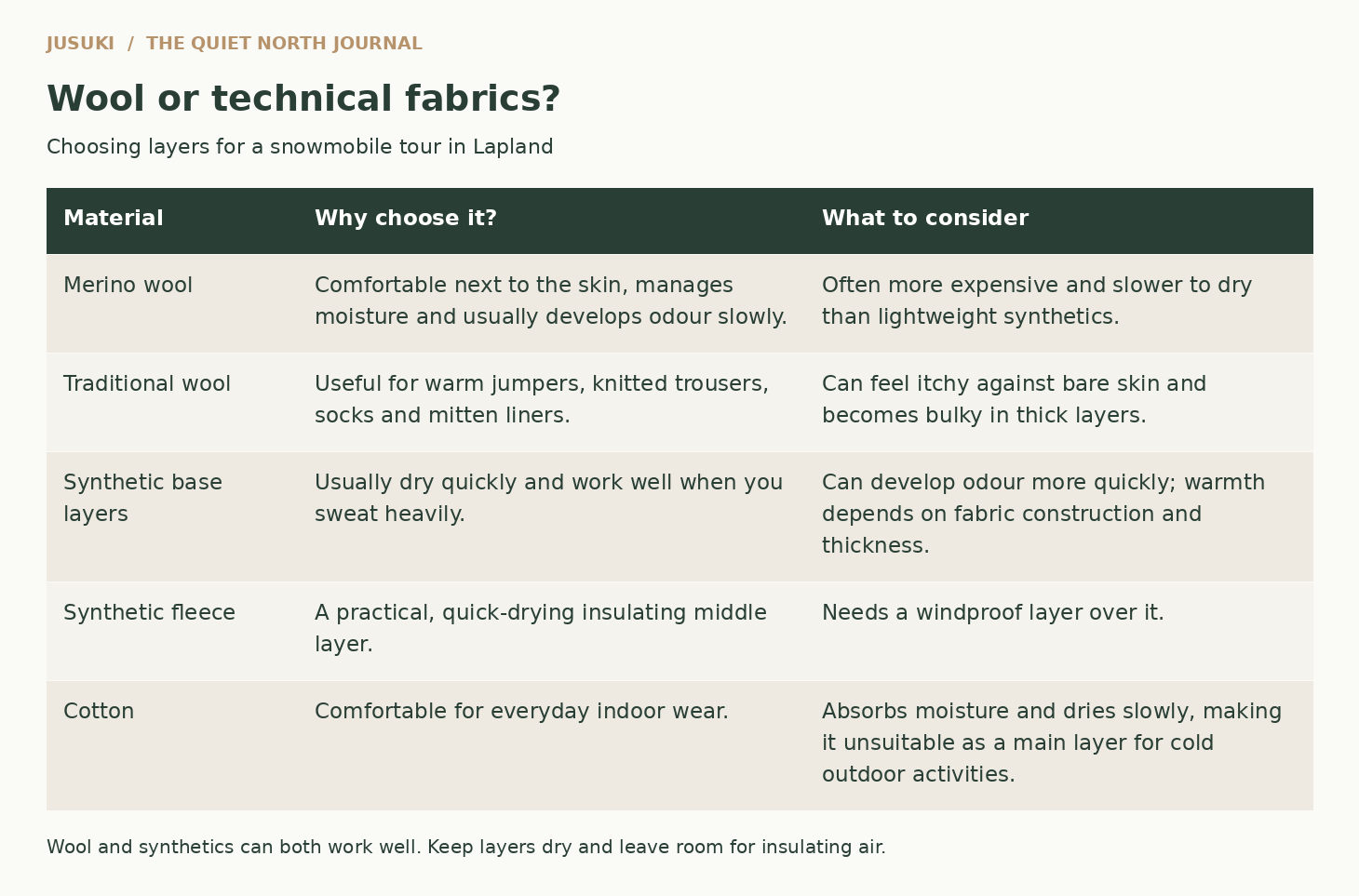
Wool and synthetic fibres can both work in a layering system. A wool-rich blend can also be a sensible choice, adding durability or stretch. Wool does not make wet clothing safe: spare dry layers still matter.
Our preference is wool close to the body, wool for much of the insulation, and purpose-made technical materials where wind protection and durability are needed.
What to wear at −10°C
At −10°C, dress for several hours outdoors rather than a short walk from your accommodation.
Feet: wool socks and insulated winter boots
Wear wool-rich socks inside proper insulated winter boots with thick soles.
One well-fitting pair may be enough. If your boots are designed with room for two pairs, a thin liner sock and a thicker wool sock can work well.
You should be able to move your toes. Adding socks until the boot feels tight is counterproductive.
Ordinary trainers, fashion boots and uninsulated rubber boots are not suitable substitutes.
Legs: long johns and insulated outerwear
Start with merino wool long johns. Add comfortable wool or fleece trousers if needed, then insulated snowmobile trousers or a snowmobile overall.
Avoid jeans. They offer little useful insulation for their bulk and become uncomfortable if damp.
Upper body: a base layer and wool jumper
Wear a long-sleeved merino base layer and a wool jumper beneath your insulated snowmobile suit.
Include your underwear in the plan. Merino or moisture-managing synthetic underwear is preferable to cotton, including a bra if you wear one.
Hands: insulated mittens
Choose windproof, insulated mittens suitable for snowmobiling. Thin wool liners can add comfort if there is enough room.
Mittens are generally warmer than comparable gloves because the fingers share the same space. Drivers must still be able to operate the controls properly.
Head, face and neck: thin layers under a helmet
Wear a thin merino balaclava or helmet liner, with suitable neck protection tucked securely inside your clothing.
Use a properly fitted snowmobile helmet and suitable goggles or a visor. Do not squeeze a thick wool hat under the helmet: it can change the fit.
Keep a warm wool hat for stops when the helmet comes off.
What to wear at −20°C
At −20°C, build on the same system with more insulation, especially around the legs, feet and hands.
Feet
Use generously insulated winter boots and dry wool socks. A thin liner plus a thicker wool sock is an option only when the boot has sufficient room. Roomy winter boots, such as Fubuki boots, Tretorn Arch Hybrid boots or similar styles, can help keep your feet warm by leaving enough space around your toes for insulating air.
Check that your toes can move after you have put on the whole outfit.
Legs
Wear merino long johns, a warm wool or fleece middle layer, and insulated snowmobile outerwear.
Pay attention to your thighs, knees and seat. These areas can become cold during a seated activity even when your upper body feels warm.
Upper body
Wear a merino base layer and a substantial wool jumper or wool midlayer.
Depending on the insulation in the outer suit, you may also need an insulated vest or light insulated jacket. It must fit without compressing the other layers or restricting movement.
Hands
Wear thin wool liners inside well-insulated, windproof mittens. Protect the wrists with overlapping cuffs.
Heated handlebars can help the driver, but they do not replace suitable handwear or keep a passenger’s hands warm.
Head, face and neck
Use a helmet-compatible balaclava, secure neck protection and appropriate goggles or a visor. Check the small gaps around the cheeks, chin and neck before departure.
Bring a spare dry face covering. Moisture from breathing can make the fabric around your mouth wet or icy.
What to wear at −30°C
At −30°C, proper clothing is essential. Each morning, our guide at JUSUKI assesses the weather and whether the planned activity is suitable for the conditions and your group.
With sufficient insulation, a carefully chosen route and suitable places to warm up along the way, a snowmobile experience can be possible even in very cold weather. Wind, time outdoors and access to shelter all influence the plan.
Our guide may shorten or adapt the route, suggest another activity or cancel if conditions are unsuitable. The clothing recommendations below are a starting point for preparing for severe cold.
Feet
Use specialist cold-weather boots with substantial insulation underfoot and enough space for your chosen wool sock system. Roomy winter boots, such as Fubuki boots, Tretorn Arch Hybrid boots or similar styles, help keep your feet warm by leaving enough space around your toes for insulating air. These boots we use the whole winter outdoors.
Start with completely dry socks and boot liners. Carry spare socks in a dry bag.
Legs
Combine merino long johns with a substantial insulating layer, such as wool trousers, fleece trousers or purpose-made insulated liners.
Finish with a well-insulated, windproof snowmobile suit. Check the fit while sitting, including at the knees, hips and waist.
Upper body
Wear a warm merino base layer, a thick wool midlayer and, where the outer suit allows, an additional insulated vest or jacket.
The aim is sufficient insulation with freedom of movement. Adding so many garments that the suit becomes tight does not solve the problem.
Hands
Use a tested cold-weather mitten system, potentially combining wool liners, thick insulating mittens and protective outer shells.
The guide must check that the driver can still use the controls safely. Carry dry spare handwear.
Head, face and neck
Use face protection compatible with the helmet and eye protection. Check carefully for exposed gaps without blocking vision, breathing or the helmet’s ventilation.
A wet or frozen face covering needs attention. Tell your guide promptly rather than continuing with uncomfortable equipment.
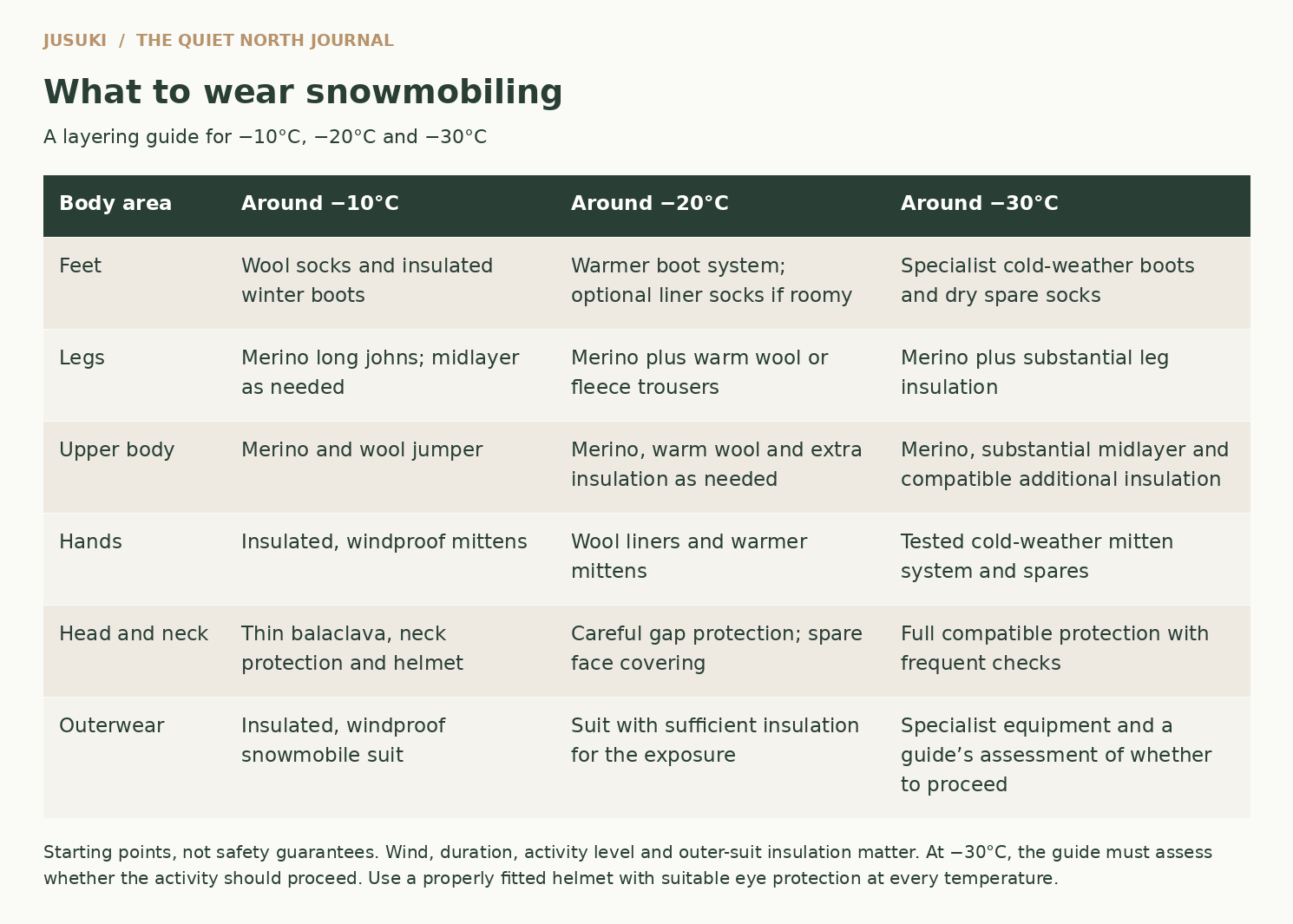
A quick comparison
These are starting points to discuss with your activity provider. The warmth of the supplied outer suit makes a substantial difference.
Why the thermometer is only part of the story
Wind increases heat loss from exposed skin. When riding, the airflow you experience also depends on your movement and the direction of the wind.
A forecast’s “feels like” temperature is therefore not a complete description of conditions on a moving snowmobile. Your clothing, activity level and exposure time also affect how quickly you cool down.
Passengers and children may need more protection or shorter outings because they move less. Do not assume everyone feels warm because the driver does.
Five details that make a difference
Dress before you become cold. Start with dry clothing and change damp socks before departure.
Avoid sweating while getting ready. Leave the outer suit open indoors and close it before going outside.
Check the overlaps. Ankles, wrists, the lower back and the neck should remain covered when you sit and move.
Keep a spare wool hat and dry accessories. A hat is useful during stops; spare socks, liners and a face covering can solve small problems before they grow.
Speak up early. Tell your guide if your fingers or toes become numb, your face hurts or you cannot get warm. A white patch on a cheek or nose may indicate frostbite. Stop and seek warmth; do not rub the affected skin.
Before your snowmobile tour in Lapland
Ask your provider exactly what equipment is supplied and what you should wear underneath it. Confirm boots, socks, mittens, balaclavas, helmets and outerwear separately rather than assuming “winter clothing included” covers everything.
For a JUSUKI experience, tell us if you tend to feel cold or are travelling with children. We can discuss clothing and suitability before your departure.
Whether you choose Sea Lapland or Ylläs, the principle stays the same: dry layers, enough insulation, protection from wind and room to move comfortably.
JUSUKI’s snowmobile tours always include premium two-piece outerwear - a high-quality insulated jacket and snowmobile trousers - along with a warm balaclava, insulated riding mittens and snowmobile boots. Wear suitable base and middle layers underneath to stay warm and comfortable throughout your experience.
Good clothing lets you give your attention to the landscape.
